What Is Neurorehabilitationin Addiction Treatment?
By Dr. Terry Spokes, DClinPsych (University of Oxford)
Clinically reviewed by Dr. Munidasa Winslow, Medical Director. Last reviewed October 2026.

Dr. Terry Spokes, DClinPsych (University of Oxford)
Dr. Terry Spokes is Clinical Director of The Winslow. An Oxford-trained clinical psychologist specialising in addiction, trauma and neuropsychology, he has held clinical leadership roles at addiction treatment centres in Indonesia, the United Kingdom and Switzerland, and previously worked in neurorehabilitation in the UK. At The Winslow, he oversees clinical care and programming across the 16-week programme. Read his full profile.
Many people in addiction treatment know what they want to change, but find it difficult to put that change into practice consistently. Addiction can affect cognitive functions such as attention, impulse control, decision-making and emotional regulation. Neurorehabilitation aims to strengthen these functions, helping people translate their intentions into lasting changes in behaviour.
When knowing isn't enough
Families often describe the same painful pattern. Someone they love promises to stop, means it, and then doesn’t. From the outside it can look like a lack of willpower, or a lack of care. From the inside, it is often something else: the brain systems that help us plan ahead, resist an urge or ride out a difficult feeling are not working as well as they should.
That gap, between knowing what you want to do and being able to do it, is where neurorehabilitation comes in. It is one part of our programme at The Winslow, and it sits alongside psychotherapy, group work, family involvement and medical care rather than replacing any of them. This article explains what neurorehabilitation is, why we include it, and what it involves.
The accelerator and the brakes
Our brains change with what we repeat. In a well-known study, London taxi drivers who had spent years memorising the city’s streets showed measurable differences in a part of the brain involved in navigation. Musicians and people who meditate regularly show changes too. The brain adapts to how we use it.
Addiction draws on the same capacity for change, in a less helpful direction. A useful way to picture it is a car with an accelerator and brakes. With repeated substance use or compulsive behaviour, the brain’s reward system (the accelerator) becomes more reactive to anything linked to the habit. At the same time, the prefrontal cortex at the front of the brain (the brakes) becomes less effective at slowing things down.
The prefrontal cortex supports what psychologists call executive functions: planning, weighing up options, holding information in mind, noticing how we feel, resisting impulses and managing strong emotions. As Dr Terry Spokes, our Clinical Director, explained at the APBAM 2026 conference in Singapore, people “find their brains incredibly reactive to cues related to the addiction, and feel this really strong compulsive drive to engage in the behaviour, but don’t find it quite so easy to put the brakes on.”
These changes are common. In a Dutch study of 656 people starting outpatient addiction treatment, 31% showed signs of cognitive impairment on a standard screening test. Estimates across studies typically range from around a third to a half, depending on the setting, the substance and how long someone has been using. Similar patterns have been found in behavioural addictions such as gambling disorder.

Why this matters for treatment
Think about what recovery asks of someone in its early weeks. Plan the day. Spot a risky situation before it arrives, such as drinks after work, and decide in advance how to handle it. Notice rising stress before it turns into a craving. Hold back from an urge. Begin to repair strained relationships.
Every one of these relies on executive function. “We may be asking people to do this at a time when their executive functioning could be compromised,” says Dr Spokes. Research suggests that people who start treatment with cognitive difficulties tend to find it harder to benefit from therapy and to put what they learn into practice, and are at higher risk of relapse.
There is good news. For most people, these thinking skills improve with abstinence. But recovery is gradual, and the larger, more lasting gains tend to come after the first year. That leaves a vulnerable window: the period when recovery demands the most of these abilities is the period when they are still healing. Neurorehabilitation is designed to help people through that window.
What neurorehabilitation means
The term comes from the treatment of brain injury and stroke, where teams of specialists help people regain lost abilities or find ways around them. In addiction treatment, it means using structured, evidence-informed techniques to support the brain systems that addiction affects, particularly attention, impulse control and self-regulation.
Approaches broadly do one of two things. Some help people compensate, by learning practical strategies that work around a weaker ability, such as routines that reduce the load on memory and planning. Others aim to restore, by training or stimulating the ability itself so that it strengthens over time.
One caution is worth stating plainly. Many popular brain-training apps make people better at the app’s own puzzles without much benefit in everyday life. Training attention appears to be an exception, which is one reason attention is a focus of our programme.
Neurorehabilitation is not a separate treatment. Addiction affects relationships, physical health, emotional wellbeing, work and a person’s sense of meaning, and our programme addresses all of these. In Dr Spokes’s words, “we’re not talking about neurorehabilitation as anything separate.” The question is whether it should sit alongside everything else, and we believe it should.
The five parts of neurorehabilitation at The Winslow
EEG neurofeedback

EEG (electroencephalography) measures the brain’s electrical activity through sensors on the scalp. In neurofeedback, a lightweight headband picks up this activity and feeds it back in real time, usually through an app or simple game. When the brain moves into a more focused or settled state, the display responds, and over repeated sessions people learn to recognise those states and shift into them more readily. Sessions are seated, quiet and painless. Neurofeedback is still an emerging area in addiction treatment, and we use it as one part of a wider training programme rather than as a treatment on its own.
Attention training

Attention Training Technique (ATT) is an audio exercise, usually about 12 minutes long. You listen to a layered soundscape, such as a busy restaurant, and follow spoken instructions to focus on one sound, then switch between sounds, then take in all of them at once. The aim is to strengthen control over where attention goes, rather than letting it be pulled automatically towards cravings, worries or reminders of using. ATT has a solid research base in anxiety and low mood, which often accompany addiction. Its use in addiction itself is newer: the first trial reported better control of attention and less worry, maintained over three months, and more research is needed.
Transcranial magnetic stimulation (TMS)
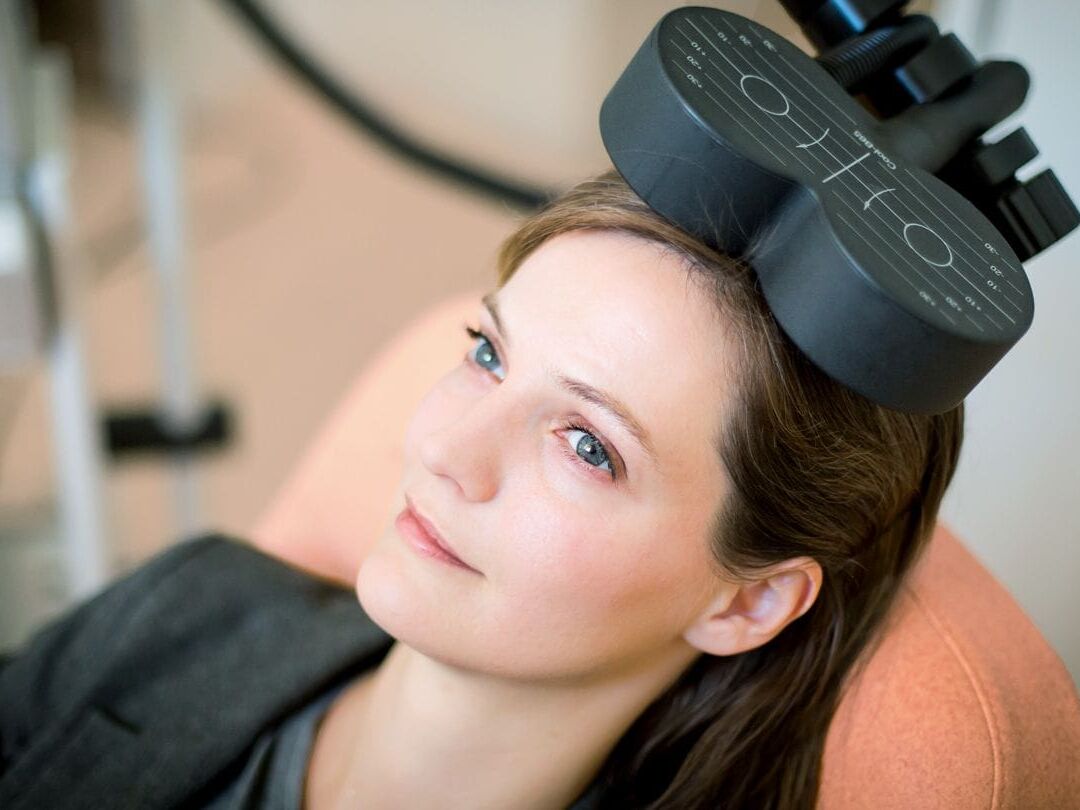
TMS uses a magnetic coil placed against the scalp to stimulate a targeted area of the brain, most often the left dorsolateral prefrontal cortex, part of the brain’s “brakes”. It is non-invasive: there is no anaesthetic, clients stay awake throughout, and they can carry on with their day straight afterwards. Most people describe the sensation as a light tapping on the head. We use a newer form called intermittent theta burst stimulation (iTBS), in which each session takes only a few minutes.
TMS is cleared by the US Food and Drug Administration for conditions including depression, obsessive-compulsive disorder and smoking cessation. For other addictions it is not yet a standard treatment, but a 2024 systematic review and meta-analysis found that repetitive TMS reduced both craving and use in studies of alcohol and tobacco, with the strongest results when several sessions targeted this area of the brain. Our Consultant Addiction Psychiatrist, Dr Sharad Haridas, explains the evidence in more depth in his article on TMS in addiction treatment.
Cognitive remediation

Cognitive remediation is a structured programme of exercises and strategies that targets specific thinking skills, such as planning, problem-solving, memory and flexible thinking. It is usually delivered in small groups, combining practice with discussion of how to use each skill in real situations, such as organising the day or preparing for a difficult conversation. It uses both of the approaches described above: strengthening skills through practice, and building strategies that work around them. Research in Australian residential services has been encouraging but mixed. In a large trial across ten services, people who completed the programme reported better executive functioning and were more likely to complete treatment, although the benefit was less clear across everyone who started it. You can read more about why thinking skills matter in recovery in Dr Spokes’s article on cognitive functioning in addiction and recovery.
Mindfulness-Oriented Recovery Enhancement (MORE)

MORE, developed by Professor Eric Garland, combines mindfulness training with techniques from cognitive behavioural therapy and positive psychology. It teaches three core skills: mindfulness, to notice cravings and stress without acting on them; reappraisal, to see difficult situations in a different light; and savouring, to rediscover enjoyment in ordinary, healthy pleasures, which addiction can dull. Much of the research on MORE has been with people misusing opioids alongside chronic pain, where a large trial found reductions in opioid misuse. Brain imaging studies suggest mindfulness training can strengthen connections between the prefrontal cortex and other regions involved in self-control. At The Winslow, MORE sits within our wider daily mindfulness practice.
What it looks like during a stay
Neurorehabilitation is part of the daily timetable, alongside individual therapy, group work, exercise and rest. Each client’s plan is tailored after assessment, so not everyone uses every component in the same way.
TMS is entirely optional. Before starting, clients are screened for suitability (people with a history of seizures, for example, are generally not suitable) and receive clear information about the evidence, including its limitations, so they can give informed consent. TMS usually begins in the second week, once someone has settled in and is physically stable, with sessions typically twice a day, five days a week. The most common side effects are a mild headache or scalp discomfort, which usually pass quickly.
Neurorehabilitation, including TMS and EEG neurofeedback, is included in our programme fees.
What to expect
Neurorehabilitation is not a cure for addiction, and none of its components works on its own. Its role is to support the work of recovery: to give someone a little more space between an urge and an action, a little more steadiness when emotions run high, and a better chance of putting what they learn in therapy into practice.
Benefits build gradually. With TMS, for example, many people notice changes only in the later stages of a course or in the weeks that follow. The research is growing but still developing, and we will always be clear with clients and families about what is well established and what is promising.
Talking to us
If you are exploring treatment for yourself or someone you care about, you can read more about our programme, or speak confidentially with our clinical team. We are happy to talk through whether The Winslow is the right fit and, if it isn’t, to help you find the level of care that is.