Cognitive Functioning in Addictionand Recovery
By Dr. Terry Spokes, DClinPsych

Dr. Terry Spokes, DClinPsych (University of Oxford)
Dr. Spokes has led residential treatment programmes across multiple centres and clinical settings. At The Winslow, he oversees clinical care and programming, delivering personalised, evidence-based treatment for sustained recovery.
When attempting to understand addiction, it is essential to adopt a multi-faceted lens. Addiction impacts multiple domains of an individual’s life – biological, psychological, social, and behavioural – and rarely presents in the same way for any two people. Each person brings a unique constellation of experiences, beliefs, patterns, and ways of making meaning that shape what resonates and what supports change.
It is therefore important to explore how addiction manifests across different areas of an individual’s life. This may include its impact on physical health, relationships, emotional and psychological wellbeing, sense of meaning or spirituality, and day-to-day functioning, such as work or study. It is equally important to understand a person’s level of insight, their current understanding of addiction, and their readiness to engage in change.
One area that often receives less attention is cognitive functioning. This refers to thinking processes such as attention, memory, and planning. Within this, executive functioning is particularly important – it underpins decision-making, behavioural regulation, and problem-solving. A growing body of research shows that addiction is associated with impairments in executive functioning, particularly in inhibitory control, working memory, and decision-making. These difficulties are clinically meaningful, as they are linked to poorer treatment engagement and a higher risk of relapse.
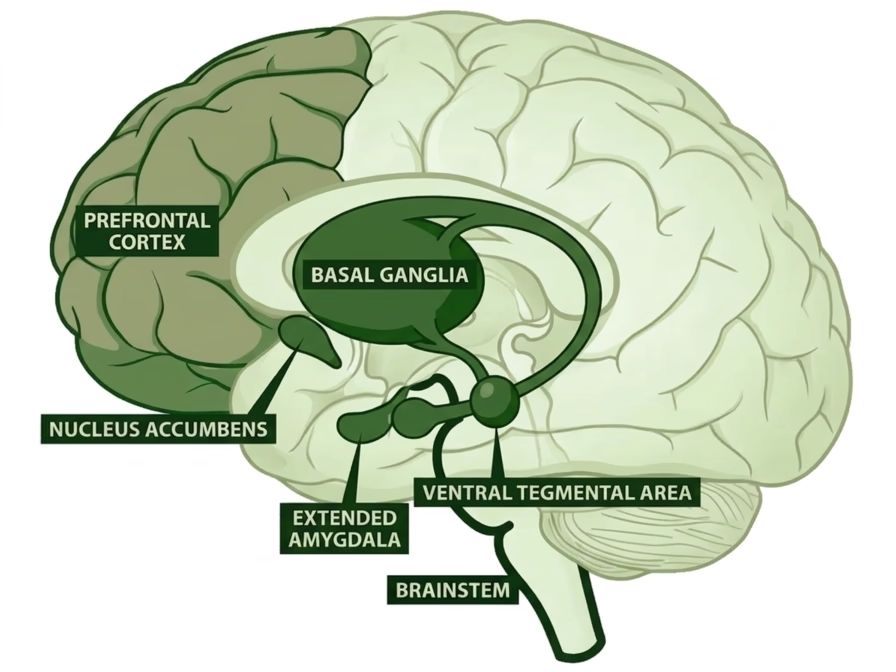
Source: Addiction Center https://www.addictioncenter.com/addiction/brain/
Cognitive functioning is closely linked to underlying brain systems. Impairments in executive functioning seen in addiction have been associated with changes in dopaminergic and glutamatergic activity across cortical and midbrain regions. These changes help explain why individuals may struggle with impulse control, planning, and adapting behaviour, even when they are motivated to change. Importantly, similar patterns have been observed in both substance-related and behavioural addictions.
Many treatment approaches focus on strengthening conscious decision-making, for example, by helping individuals identify high-risk situations to avoid and supportive environments to engage with. While valuable, this alone is often insufficient.
Relapse in early recovery is frequently less about a lack of knowledge and more about a reduced capacity to inhibit automatic responses, regulate attention, manage emotional discomfort, and plan ahead. These processes are shaped by neural systems operating outside of conscious awareness and may take time to recover.
For this reason, treatment should also incorporate approaches that support neurocognitive recovery – targeting areas such as attention, inhibitory control, and cognitive flexibility. Strengthening these capacities, through interventions such as repetitive transcranial magnetic stimulation (rTMS), attention training, or cognitive rehabilitation, can enhance self-regulation, reduce impulsivity, and support individuals to navigate high-risk situations more effectively.
In doing so, we can help build greater resilience against relapse and support more sustainable, long-term recovery.
Cognitive remediation, attention training, EEG neurofeedback and TMS (iTBS) form the neurorestoration component of The Winslow’s 16-week programme, delivered alongside psychotherapy.
While this guide provides a foundation, every case is individual. To discuss your specific concerns, please contact our clinical team for a confidential discussion.